 Crossings TV Asian Television – Home to Asian Americans
By Selen Ozturk
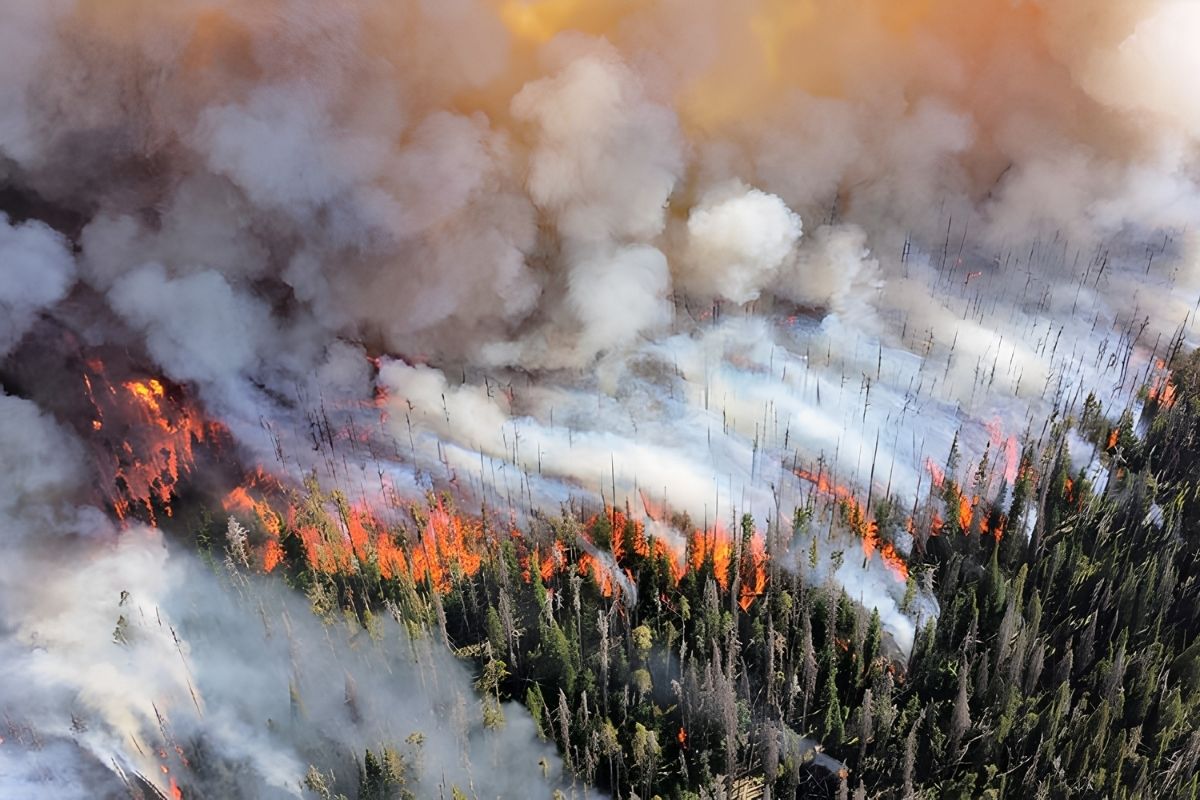
As California moves through the most dangerous stretch of its 2026 fire season, state emergency officials are expanding efforts to help residents prepare before fires ignite.
The need to prevent wildfire risk has moved well beyond California’s rural areas into dense urban neighborhoods as well, said California Governor’s Office of Emergency Services (Cal OES) officials, pointing to the January 2025 Eaton and Palisades fires and this month’s Gann Fire in Calaveras County — which burned more than 10,300 acres, killed one person and had Gov. Newsom declare a state of emergency in the county.
“We are in the middle of peak wildfire season, and there are new fires starting every day across the state,” said Matt Notley, deputy director of crisis communications and public affairs at Cal OES. “These incidents can threaten communities quickly, strain local resources, and they require fast, coordinated action … Protecting them cannot be an afterthought.”
Preparing before fires start
Accordingly, the state is increasingly investing resources not only into fighting fires, but preventing them well before they happen.
Cal OES oversees the California Fire and Rescue Mutual Aid System — the largest of its kind in the nation, linking more than 1,000 local government fire agencies and engines so that when a fire overwhelms a community’s local resources, engines, water tenders, hand crews and dispatch personnel can be moved across jurisdictions.
This year, the agency has already approved 46 mutual aid requests from counties to pre-position firefighters and equipment ahead of dangerous fire weather, after spending roughly $61 million on similar pre-positioning support in 2025.
Since July, California has also sent personnel and equipment to 12 other high-risk states, including Texas and Minnesota.
To give responders information about “where a fire is moving, which communities may be threatened and where evacuations or additional resources may be needed,” Notley said Cal OES also runs the Fire Integrated Real-Time Intelligence System (FIRIS), a program using aircraft specially equipped with infrared and thermal-imaging cameras to map fires in real time, sometimes within minutes.
FIRIS has flown 324 missions this year alone and is available to all California counties.
On the wildfire recovery side, Newsom secured an extension last June for the FEMA Individual Assistance Program supporting survivors of the Eaton and Palisades fires, pushing the aid deadline to July 9, 2027.
More than 35,000 households have received assistance through the program, more than $177 million has been awarded to eligible survivors and more than 1,200 households have received continued temporary housing assistance already.
More than $2.5 billion in public-assistance projects remains pending with FEMA, while the state is working to expedite available federal funding, according to Notley.
Davina Mapes, Cal OES’s public affairs manager, said the agency is advocating to change how federal disaster aid is calculated.
“Many of the federal disaster policies were created to support hurricane response and recovery, and don’t easily fit the type of complex emergencies we face in California, like wildfires,” she said — for instance, FEMA wildfire aid calculations may disadvantage low-income communities where property values are lower than in affluent areas.
Closing the “awareness-action gap”
Mapes explained that new research Cal OES conducts with community partner organizations shows an “awareness-action gap”: Across communities, Californians already understand wildfire risk and agree that preparedness matters, “but need a little bit more help to be prepared.”
“Emotional overwhelm, costs, and competing priorities are the main things standing in the way of concrete steps that resonate,” she added. “People need numbered lists of simple, specific actions. That is the most effective way to make preparedness feel achievable.”
To help close that gap, the Ready California campaign, formerly known as Listos California, has expanded its wildfire preparedness initiative to include a resource hub offering printable, video and social media materials in up to 25 languages, including the Disaster Ready Guide, a mental health-focused First Aid Kit for Your Mind and a Five Steps to Readiness palm card, all available at ready.ca.gov and listoscalifornia.org.
The campaign also maintains a broader hub covering hazards including wildfires, earthquakes, extreme heat and severe winter weather.
Since the campaign first launched in 2019 with more than $100 million in state investment, nearly 16 million Californians — roughly 41% of the state — have taken part in face-to-face outreach, including events with community-based organizations, tribal governments and local emergency response teams to help residents create emergency plans and connect them with local alert systems.
The campaign has also generated more than 103 million digital impressions and 6.7 million printed materials.
Mapes also reassured immigrant communities that the state’s emergency mass care shelters are open to all Californians, regardless of immigration status: “We want people to know that they don’t need to share any immigration information, and that sheltering is available to everyone. They won’t ask you for information.”
California’s past disasters have demonstrated that preparation cannot begin once an emergency is already underway, said Diana Crofts-Pelayo, assistant director of crisis communications and public affairs at Cal OES:
“Trust really comes from the people you know, and in an emergency, that trust can save lives.”
— Diana Crofts-Pelayo, Cal OES Assistant Director of Crisis Communications and Public Affairs
Omaira Baptista, a community educator working with immigrants, farmworkers, older adults and people with disabilities in Napa and Lake counties, said local wildfires taught her that fear of wildfires may come as much from lack of preparedness as from the event itself.
“People’s biggest fear is not just the fire itself, but feeling alone and uninformed,” she said. “Using tools from Listos California, we saw firsthand that when we explain simple steps, fear turns into strength. We are not just handing out guides. We are giving families back their peace of mind and teaching them how to make decisions for themselves and their family before, during and after an emergency.”
Steven Vera, of Disability Services and Legal Center in Santa Rosa, said that preparation and trust is especially important for people with disabilities who may need to plan around transportation, mobility equipment, medications, service animals, communication and caregivers.
Vera’s organization has found that relying on a single form of communication, for instance, can leave people without key information.
He pointed to utility outage notices — including public safety outages conducted to mitigate fire risk — as a common failure point: “We’ve learned that sometimes if PG&E will send out an email to a consumer or client, letting them know that a power outage is going to be coming, some consumers might just see the PG&E email and discard it,” Vera explained, adding that he and his staff follow up with text messages and phone calls, leaving voicemails when recipients don’t answer.
Vera added that the first step Californians can take to prepare is to keep a go-bag ready and packed with essential items like phone chargers, medications, money, a flashlight and personal identification documents.
Residents are also recommended to plan three different exit routes where they live and work, and make an evacuation plan so everyone knows where to go when disaster strikes.
“Work with your family, work with your friends, have a plan set in stone,” said Vera. “That way, when a time of need comes, you can just grab your backpack and proceed with your plan.”